Advocating for Your Needs by Establishing Healthy Boundaries
Becky Schmidgall, Kinship Family Group Facilitator
As the Palo Verdes bloom here in Tucson, we realize that Mother’s Day is around the corner. And with that holiday comes a lot of mixed emotions and challenges for our kinship families. Because of this, we felt it was prudent to center our conversation this month around healthy boundaries. Specifically, how do we advocate for our needs and the needs of the children in our care by establishing healthy boundaries?
Dawn Davenport, founder and former Director of CreatingAFamily.org, says on her podcast Creating a Family: Talk about Adoption & Foster Care, "the essence of a strong kinship caregiving relationship is healthy boundaries."
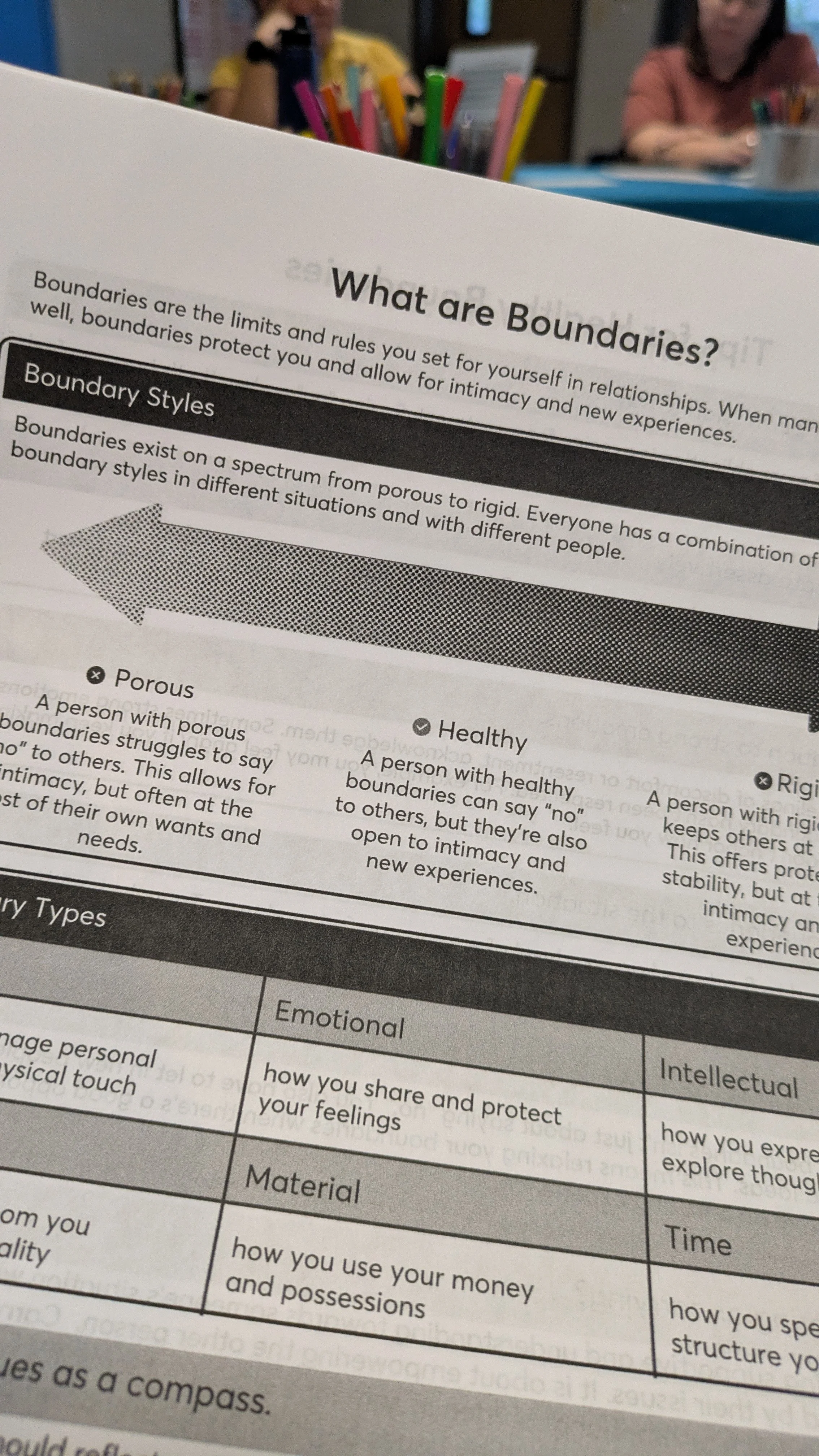
Boundaries are the limits and rules you set for yourself in relationships. When managed well, boundaries protect you and allow for intimacy and new experiences. We all have numerous types of boundaries, such as physical boundaries, emotional boundaries, and time boundaries, to name a few. In addition, our boundaries exist on a spectrum, from porous (an extreme lack of boundaries) to rigid (extremely firm boundaries that offer protection but prevent connection).
Kinship caregivers walk a fine line with the boundaries they set with the children in their care and with the biological parents of those children. Because of their existing relationships, boundaries may have been much different prior to the kinship placement, and that can make adjusting these boundaries very challenging and emotionally draining. One caregiver at our kinship dinner expressed that she has made progress with setting boundaries with the kids in her care, but she still struggles to maintain healthy boundaries when it comes to her time. She feels she often over-commits and takes on more responsibility than she realistically has capacity for, especially with extended family members.
One New Jersey nonprofit supporting foster families, Embrella, explains it this way:
“Kinship caregivers, like foster and adoptive parents, are expected to be altruistic. But they face a unique challenge – in order to do what’s best for a child in their care, they often risk damaging their relationship with their own child. Setting boundaries as a kinship provider is a big challenge because when it’s all in the family, doing the right thing can really hurt.”
These moral and ethical dilemmas pop up even more around holidays, when bio parents often want to see their children and have certain expectations about what these visits will look like. Caregivers have the added responsibility of being clear with bio parents ahead of time and being firm when the time comes. And for children whose parents are no longer involved in their lives, the responsibility to address the emotional fallout of missing bio parents lands on caregivers, as well.
Despite the challenges, our families also shared some boundary successes. One family shared that they recently took a big step of establishing a firm boundary with a bio parent. They spoke of how “it was a long time coming,” how it was difficult, but they “felt totally at peace” after the conversation. It is always an honor to bear witness to such candor in our kinship groups, and we are grateful to the families who show up to support each other as they walk this road of kinship care together.
Additional resources:
Help for Shared Parenting as a Kinship Caregiver
Boundaries 102 - by Arizona Association for Foster and Adoptive Parents (AZAFAP)
General tips for establishing and maintaining healthy boundaries:
Communicate your limits and expectations
Do not agree to things just to please others
Adjust boundaries based on the situation
Risk personal discomfort if it serves a higher need
Use your personal/family values to guide boundary decisions
Pay attention to strong emotions- what are your instincts telling you?
Be as flexible and adaptable as possible, while prioritizing the safety and stability of children in your care
Questions for reflection:
Are there certain circumstances or people that make setting boundaries difficult?
What are some specific actions you can take to improve your boundaries?
When is it worth being flexible with your boundaries?